
Items filtered by date: June 2026
Puerto de Santiago Tenerife Review
- Puerto de Santiago Beaches
- Puerto de Santiago Things to Do
- Puerto de Santiago Nightlife
- Where is Puerto de Santiago?
- How far is Puerto de Santiago from Tenerife South airport?
- Places To Stay In Puerto de Santiago
Puerto de Santiago Tenerife is a small quiet and relaxed beach resort, suitable for families and couples looking for a tranquil holiday. Elegant villas, apartments and hotels are set behind the beach. Puerto de Santiago does not set out to appeal to the mass tourist trade of the larger resorts such as Playa de las Americas further south.
Puerto de Santiago merges with Los Gigantes to the north which is a 20-minute walk away over the cliffs, and Playa de Arena to the south. If you don’t fancy the 20-minute walk, reliable bus services are running between the resort centres. Los Gigantes is another upmarket resort that gets its name from the enormous cliffs that tower over the resort.
Most of the holiday accommodation in Puerto de Santiago is appartment based with a handful of hotels.
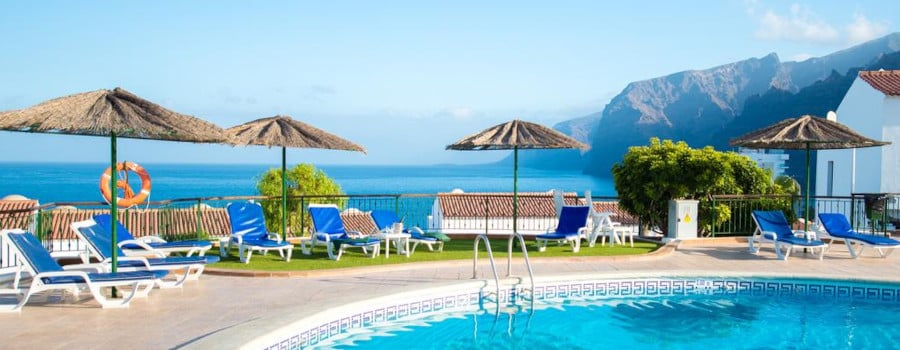
Puerto de Santiago Beaches
Puerto de Santiago has a small beach, Playa de Santiago, of black sand with all necessary facilities. However, one of the best beaches on this part of the coast is a short walk away at Playa la Arena, the beach is made of exotic black sand. It is every bit as good as golden sand. This beach has been awarded the Blue Flag for water quality and cleanliness every year since 1989.
This part of the coast is otherwise mainly volcanic rock. There is a flag system for swimming conditions which you must adhere to, remember this is the Atlantic Ocean where you may experience strong currents.
Take a look at our Puerto de Santiago photos
Booking.comPuerto de Santiago Things to Do
Puerto de Santiago is ideal for families and mature holidaymakers looking for somewhere quieter than the larger resorts in the south of Tenerife. The resort is quite relaxing and relatively peaceful. There are cafes, bars and restaurants for lunch and dinner in the evenings with some small supermarkets and shops selling the usual tourist items. A short walk away is La Arena with more bars and restaurants and the charming Playa de la Arena beach.
There is also a pleasant traffic-free seafront promenade to walk along from Playa de Santiago heading towards Los Gigantes where there is a bar and restaurant on the oceanfront.
Organised fishing and pleasure boat trips operate from the harbour. The resort has excellent views out towards La Gomera some 20km off the coast of Tenerife.
Choose Your Hotel, Villa Or Apartment In Puerto de Santiago
Puerto de Santiago Nightlife
There are plenty of bars, some with live entertainment around the resort, and restaurants including tapas, pizza, Chinese, Mexican, Italian and Indian. On Calle de Hondura where the Hotel Barceló Santiago is located are more bars and restaurants, including the lively Route 66 bar with live music every night.
Where is Puerto de Santiago?
Puerto de Santiago is located on the west coast of Tenerife in the municipality of Santiago del Teide about 28 km from the resorts of Los Cristianos and Playa de las Americas.
Puerto de Santiago location is shown on our Puerto de Santiago map.
How far is Puerto de Santiago from Tenerife South airport?
The distance to Puerto de Santiago from Tenerife South Airport is approximately 43km by road, the transfer time takes about 45 minutes. The taxi fare from Tenerife South Airport to Puerto de Santiago will cost about 61 euros. There are no direct bus services from Tenerife South Airport to Puerto Santiago. However, you can get there by bus from the airport if you change buses.
How To Get To Puerto de Santiago From Tenerife South Airport.
Be aware that this part of Tenerife is very hilly and may therefore not be suitable for those who have mobility problems.
Places to Stay in Puerto de Santiago
Santa Cruz de Tenerife
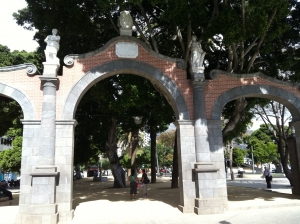
Santa Cruz de Tenerife, better known as Santa Cruz, is the capital of Tenerife and of the Spanish province of Santa Cruz de Tenerife. Santa Cruz is far removed from the tourist resorts of the island. Santa Cruz is a major port and has population of about 200,000 residents, which is about a third of Tenerife’s population.
The city is bustling and modern and has the feel of a real Spanish city. The suburbs spread to the Anaga mountains to the north of the city, and spreads southwest wards to the Cumbre Dorsal.
Santa Cruz shares the governance of the Canary Islands with Las Palmas on Gran Canaria, and is one of the largest ports in Spain.
The city’s history goes back to arrival of the Conquistadors from Spain; it is on the coast at the site of the present day Santa Cruz that they landed in 1493.
Only a small minority of the tourist that come Tenerife visit Santa Cruz, as it is quite a way north east of the main tourist resorts, but this is a shame, as a visit to the city make a very interesting day out. It has a sea front promenade, shops, museums and leafy squares with cafes and terraced where you can enjoy a drink. Many cruise ships come to the port and so it has adapted for this tourist trade.
Santa Cruz enjoys the status of a ‘Free Port’ which means it can sell its goods duty free, so offers the shopper many bargains. Travel agents offer shopping trips, but these are usually only for half a day as the shops close at 13:00. You can hire a car to visit, but parking can be a problem, you should arrive early and use the underground car parks at Plaza Espania. You can also use the bus services that run from the resorts half hourly.
Santa Cruz is the venue of the biggest carnival outside of Rio de Janeiro. The Santa Cruz Carnaval is held every year on Shrove Tuesday.
Must See in Santa Cruz
Museo de la Naturaleza y el Hombre: history museum with extensive archaeological section and artefacts from the stone age Guanche people and ancient mummy's.
Iglesia de Nuestra Senora de la Concepcion: church with a beautiful interior and a hexagonal tower founded in 1502.
Mercado de Nuestra Senora de Africa: colourful market with a genuine Tenerife flavour selling fruit, meat, and vegetables. There is a busy flee market every Sunday in the surrounding streets.
Parque Municiple Garcia Sanabria: botanical gardens with trees, fountains, promenades and statues.
Parque Maritimo: sea water lido with pools, Jacuzzi, restaurants, and a beach.
Museo Militar de Almeyda: military museum with a section dedicated to Nelson's failed at attack on the city in 1797. On display is the canon (El Tigre) that allegedly shot Nelson in his arm, which was then amputated.
Where is Santa Cruz
Santa Cruz location on Tenerife is marked on the map below.
Puerto de la Cruz Tenerife Resort Review
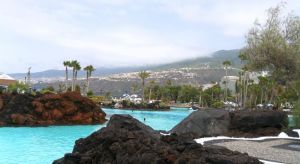
Puerto de la Cruz is the largest resort in north Tenerife, it's very popular with Spanish tourists and maintains its Canarian character. It is cooler than the resorts in the south due to sea breezes and more cloud cover, which in the height of the summer can be a real advantage if you don't like the searing sun.
The town has some high rise hotels on the sea front dating from the first tourist boom in the 1960s. The old town and fishing port are very pleasant and charming with historic buildings, good cafes and excellent restaurants. There is also a Lido on the seafront for those hot sunny days and is a lovely complex of pools with islands and palm trees where you can relax and sunbathe.
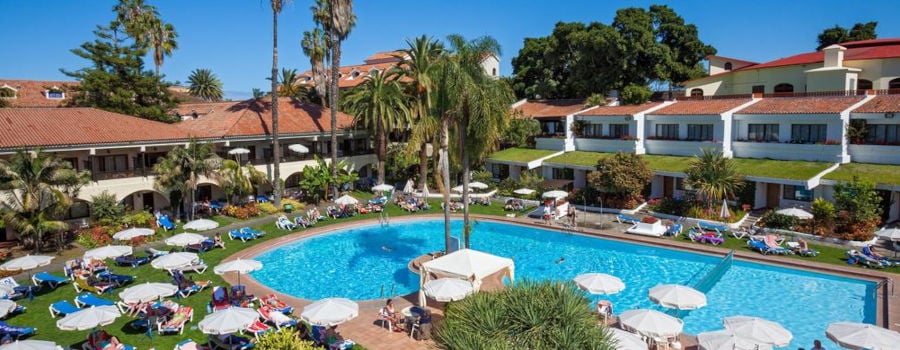
Puerto de la Cruz was once a port for the town of La Orotava higher up in the hills. It transformed into a tourist centre in the 1960s when charter flights began bringing tourists in large numbers. Puerto de la Cruz was first used as a tourist centre in the 19th century when wealthy people from England stopped off here during voyages. Puerto de la Cruz attracts more tourist than any other resort on Tenerife, even though it can be cloudy, particularly in the winter.
Where is Puerto de la Cruz?
Puerto de la Cruz is located on the northern coast of Tenerife at the foot of the La Orotava Valley approximately 90km from Tenerife Sur airport. The location of the resort is shown on our Puerto de la Cruz map page.
Puerto de la Cruz Attractions
Thanks to its hotels and leisure options, Puerto de la Cruz is a popular holiday destination. But it also has a beautifully preserved town centre that was declared a Historic-Artistic Site in 1985, the heart of which is the vibrant Plaza del Charco. Here is a great place to set off on a tour of the towns sites such as Casa de la Aduana, Casa Miranda, the La Peña de Francia church and the Marquesa Hotel. One of its busiest and most popular spots is the fishing harbour, near the seaside neighbourhood of La Ranilla. You shouldn't leave the town without visiting its 17th-century Botanical Gardens located at the upper end of the town at La Paz.
Puerto de la Cruz is a very lively resort. Plaza del Charco is the hub of all activity in Puerto de la Cruz, it's buzzing with bars and restaurants as are the surrounding streets. The plaza itself is shaded by massive palm trees. It has seats, kiosks and kids playground where local families come to relax and socialise. The plaza is also the venue for the town's fiestas. The old town and the promenade around the Martinez lido are the most vibrant parts of the resort, with a traffic-free promenade lined with restaurants with outdoor terraces.
Puerto de la Cruz is divided into 4 main districts, Botánico, San Antonio, Martiánez and Playa Jardín.
The Botánico area includes La Paz, which is considered the smartest part of Puerto de la Cruz, with modern buildings and lots of bars and restaurants. However, it is a bit of a walk to the centre of the town and beaches. La Paz is up a steep hill from the town centre and beaches, so may not suit some people, but you can always get a taxi to the resort centre.
San Antonio - Parque Taoro is a quiet residential district someway from the centre of Puerto de la Cruz up a hill around Parque Taoro. There are no tourist facilities as such up here apart from a handful of good hotels and café bars. So you will need to head down the very steep hill to get to the main resort bars and restaurants. The very lovely Parque Taoro is a tranquil place to spend some time.
Places to Stay in Puerto de la CruzMartiánez is the main tourist area of Puerto de la Cruz, located right on the seafront and promenade. This is where most of the bars, restaurants and most of the resort's hotels are located. The promenade and back streets are car-free zones where there are many shops and boutiques. There is also a small black sand beach here Playa Martiánez.
Playa Jardin area is named after Puerto de la Cruz best and well-kept beach. The district has bars, restaurants and some hotels.
Bring your Spanish phrasebook as the primary clientele are the Spanish, so some shops don’t speak much English. However, it is widely spoken in hotels, restaurants and bars.
Puerto de la Cruz Beaches
If you want to play in the sea, then head for Playa Jardin which is to the west of the resort, this is a beach of black volcanic sand. Don’t be put off by the colour of the sand, as the beach is as good as any. It also has a superb tropical garden with a maze of palm trees and a restaurant and snack bar. There is also the black sand beach Playa Martianez at the eastern end of the resort promenade, by the Lago Martianez, that has a beach bar and a surf school. There is also the fabulous Playa Bollullo, a secluded beach out of the town to the east, which you can walk to through banana plantations. A nice walk to Playa Bollullo beach.
On the seafront, there is also the Lido Martianez, where you can swim in the saltwater pools and sunbathe by the pools or in the well kept tropical gardens.
The resorts in the south of the island.
How far is Tenerife South Airport from Puerto de la Cruz?
The distance from Tenerife South Airport to Puerto de la Cruz is approximately 90km by road taking about 60 minutes.
How To Get From Tenerife South Airport To Puerto de la Cruz
Places to Stay in Puerto de la Cruz

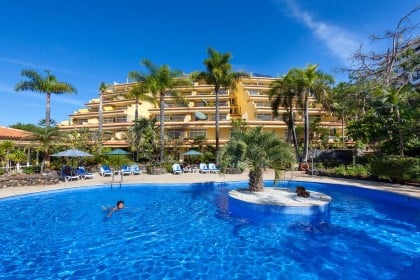
Frequently Asked Questions About Puerto de la Cruz
Is Puerto de la Cruz in south or north Tenerife?
Puerto de la Cruz is located in the north of Tenerife at the foot of the Orotava Valley.
Golf del Sur Tenerife Resort Review
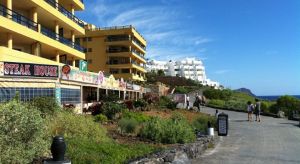
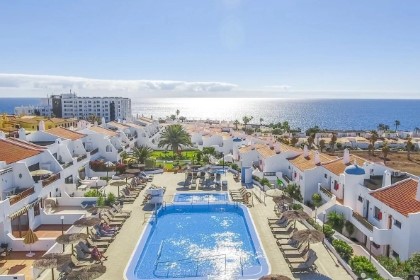
Golf del Sur is a modern resort built around an 18 hole golf course. Amarilla Golf and Country Club, its neighbour, has effectively now become part of Golf del Sur also has an 18 hole championship golf course. These were separate resorts until a few years ago when roads were linked across the Barranco that used to separate them.
The resort is made up of individual hotel and apartment complexes that are centered on entertainment areas. The central square is at San Blas, which is to the east of the resort near Los Abrigos, where there are shops, boutiques, bars and restaurants. There is also a new marina where are boats and yachts moored with a couple of café bars where you can sit and relax.

There are also several excellent restaurants on the seafront next to the marina where you can have a drink, lunch or dinner overlooking the Atlantic Ocean. A coastal path runs along the coast from the marina to the village of Los Abrigos, where there are some fine fish restaurants. Los Abrigos has mostly avoided the temptation to develop and remains a typical Tenerife fishing village.
Golf del Sur is made up of residential complexes 4 and 5-star hotels and timeshare blocks. Amarilla Golf is to the west of the resort and is much older and is mainly residential apartments and villa complexes.
Places to Stay in Golf del SurGolf del Sur Nightlife
Golf del Sur is a quiet and relaxed resort and has no night clubs as such. Still, there are plenty of bars, and some excellent restaurants and a couple of cabaret show bars with tribute type acts. There is more to this resort than the central San Blas area where there is nightly musical entertainment in the square. If you explore the resort, there are some very nice places where you can eat and be entertained. Golf del Sur won't suit those looking for clubs where you can dance till dawn but will suit holidaymakers looking for a more relaxed evening out with diner and some drinks.
Golf del Sur Beaches
Golf del Sur is not the place to come for a beach holiday, so you will probably want to have accommodation with a swimming pool if you're going to sunbathe. There is a tiny pebble beach by the San Miguel Marina made of black volcanic sand, pebbles and boulders. There is also a small beach at San Blas with a small patch of black sand and large boulders but is not really suitable for bathing or paddling in. Take a look at our photos of Golf del Sur.
Where is Golf del Sur
Golf del Sur is located in the municipality of San Miguel de Abona on the south coast of Tenerife approximately 16km by road from the resorts of Los Cristianos and Playa de las Americas. Its location is shown on our Golf del Sur map.
Tenerife South Airport to Golf del Sur Transfer Times
The distance from Tenerife Reina Sophia Airport to Golf del Sur is approximately 9km by road that takes about 15 minutes. The taxi fare from Tenerife south airport to Golf del Sur will cost about 17 Euros. The 415 bus service goes from Tenerife south airport to Golf del Sur. How To Get To Golf del Sur From Tenerife South Airport
Places to Stay in Golf del Sur
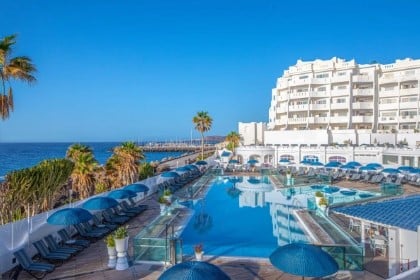
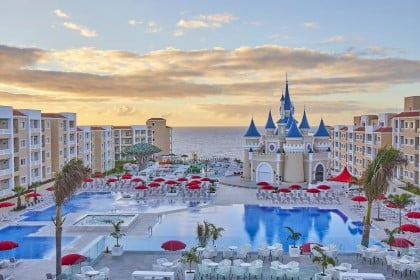
Golf del Sur Bus Services
Golf del Sur has bus services connecting it to the popular southern resorts. This link shows the location of the bus stops in Golf del Sur. The following bus services operate to Golf del Sur, clicking on the bus route number will show you the bus time tables.
La Gomera
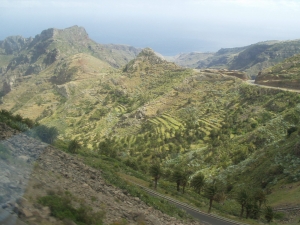
La Gomera is an island off the west coast of Tenerife and is the second smallest of the Canary Islands. La Gomera can be reached via Jetfoil in 40 minutes from Los Cristianos to San Sebastian de la Gomera.
People come to La Gomera for the tranquillity, so don’t expect much tourist activity. The only resort of any size is San Sebastian, there are a few beaches but these are small and made of black sand of shingle.
If you are going to hire a car be aware that the roads are very narrow and winding and the journeys can take longer than expected.
The island has two main types of visitor, day trippers from Tenerife and nature lovers who come in smaller numbers. Walking is very popular and there are extensive trails across the island. The centre of the island is covered by the Parque Nacional de Garajonay which was declared a World Heritage site in 1986.
The road heading north inland from San Sebastian rises steep and winding, where there are sheer drops down in to the valleys below. The peak of Garajonay is La Gomera’s highest point at 1487m and is often covered in mist and can be very chilly, but the conditions are superb for walkers and hikers.
The Parque Nacional de Garajonay is covered by a sub tropical Laura forest of the type that once covered the European continent in the Tertiary period.
The island is covered with a web of Barancos that spread from Garajonay to the coast. Much of the north and west of La Gomera is used for agriculture where bananas are the predominant crop, but the poor soil has always been difficult to farm.
La Gomera has its own whistling language that has survived from the pre Spanish days of the Guanche’s that was used to communicate across the valleys of the island. This language nearly died out but the children of La Gomera are now compelled to learn this in school.
Christopher Columbus stopped here to collect supplies on his voyages across the Atlantic discovering the Americas.
Unlike most of the other Canary Islands La Gomera has permanent flowing streams due to the relatively high rain fall.
Garachico Tenerife Review
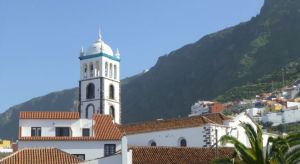
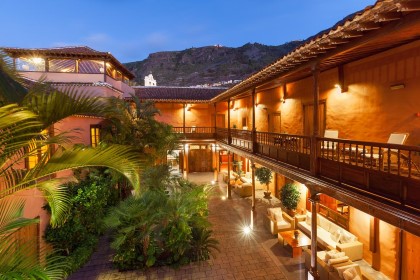
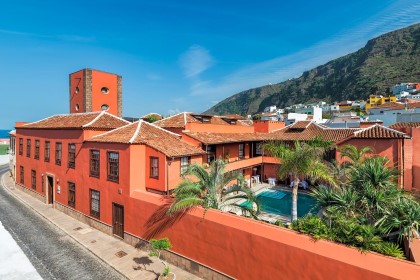
Garachico on Tenerife’s northern coast is a picturesque town worthy of a visit. However, it is not a resort as such, but there are some excellent hotels, and the town does cater to tourists. There are some excellent restaurants and small bars the locals use.
Most visitors to Garachico only stop to visit and bathe in the lava rock pools created when the volcano Montana Negra erupted in 1706. But the town’s real charm is in the streets away from the seafront, where its historic streets and buildings are located.
Take a stroll around the cobbled streets and enjoy the old historic buildings dating back to the 16th century, stop to have a drink in the Plaza Gloriata de San Francisco by the church. Visit the Castillo de San Miguel, a fortress built in 1575 to defend the port against pirates. You visit the castle for a small fee where there is a small historical exhibition.
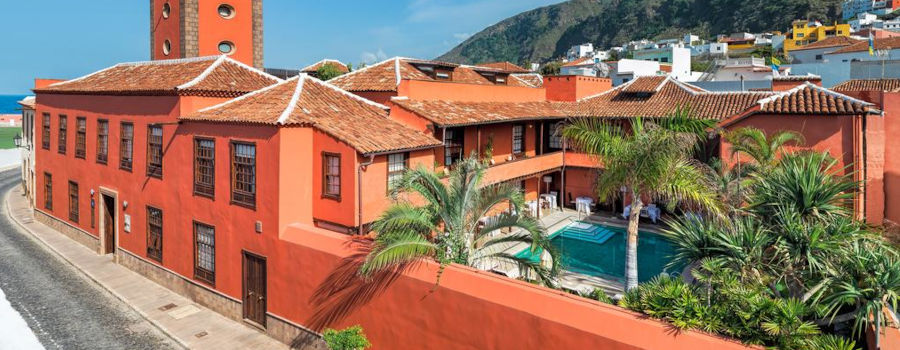
The town’s main attraction is the former Convent of San Francisco on the town’s main square of Plaza Gloriata de San Francisco. The building houses various exhibitions and houses the Museo de las Naturales, which has a fascinating account of the 1706 eruption of the nearby Volcano Negro.
You must also take a look at the beautiful Hotel La Quinta Roja, which is opposite the Convent of San Fransisco. The building has been restored to its former glory and is well worth splashing out to spend the night.
Approaching Garachico from the south has some dramatic scenery, the road down to the town is steep and very winding. Garachico was once north Tenerife’s principal port until it was destroyed by a volcanic eruption in 1706 from the Negra volcano and completely blocked up the harbour with lava. The area where the seaport was is now dry land and has been built on. The town has had its share of misfortune in the past, having been afflicted by earthquakes and the plague.
Places to Stay in GarachicoBring your swimwear with you as there are refreshing natural lava rock pools where you can take a dip. The sea can become quite rough here, and it is not advisable to use these pools, or the ocean for that matter when the sea condition is rough. The rock pools can get a bit dangerous when the sea is rough, as the sea swell surges into the pools.
Also worth a visit is the Parque Puerto de Tierra in the Plaza Juan Gonzalez de la Torre. In these gardens stands the famous 16th-century gateway known as the "Puerta de Tierra" (Land Gate), marking the former entry to the once-thriving port of Garachio. It is all that is left of the original port after the volcanic destruction of 1706.
Garachico is full of charm and character, and makes an excellent base to explore the mountains of north Tenerife known as Teno Massif, however the town does not cater for tourists on the scale of the major resorts, and is really an ideal place to stay for just a few days.
Garachico is full of charm and character and makes an excellent base to explore the mountains of north Tenerife known as Teno Massif. However, the town does not cater to tourists on the scale of the major resorts and is really an ideal place to stay for a few days.
Garachico will appeal to walkers and those looking of peace and quiet away from the busy mass tourist resorts. The town is charming, peaceful and excellent for strolling around. Have a glass of wine, beer or coffee outside one of the cafes.
Where is Garachico
Garachico is located on the north west coast of Tenerife, its position is shown by the marker on the Garachico map. Garachico is in the region of the island known as “Isla Baja” that includes the districts of Garachico, Buenavista del Norte, El Tanque and Los Silos. The nearest large town to Garachico is Icod de los Vinos approximately 6km away by road.
Getting to Garachico
You can get to Garachico by bus from the resort of Puerto de la Cruz and from the southern resorts of Playa de las Americas and Los Gigantes. Bus services from these resorts go to Icod de los Vinos bus station where you will need to change buses.
From Playa de las Americas get the 460 to Icod bus station, from here get the 363 bus heading to Buenavista which goes through Garachico. From Puerto de las Cruz travel on the 363 bus heading to Buenavista and alight at Garachico, which is about 10 minutes after Icod bus station. From Los Gigantes catch the 325 to Icod bus station, then change to the 363 bus to Buenavista.
Tenerife South Airport to Garachico Transfer Times
The distance from Tenerife Reina Sophia Airport to Garachico is approximately 73km by road taking about 1 hour 15 minutes. Here is a map to show you the route by road from Tenerife south airport to Garachico.
Garachico Weather
Garachico is situated on the northern coast of Tenerife having its own microclimate. During the summer months, Garachico is sunny and warm, with the searing summer heat kept at bay by the cool breezes coming from the northerly ocean trade winds.
In winter the north of the island is generally somewhat cooler than the south of the island with higher rainfall and cool evenings.
You can read more about the weather in Garachico.
Places to Stay in Garachico
Las Galletas Tenerife Review
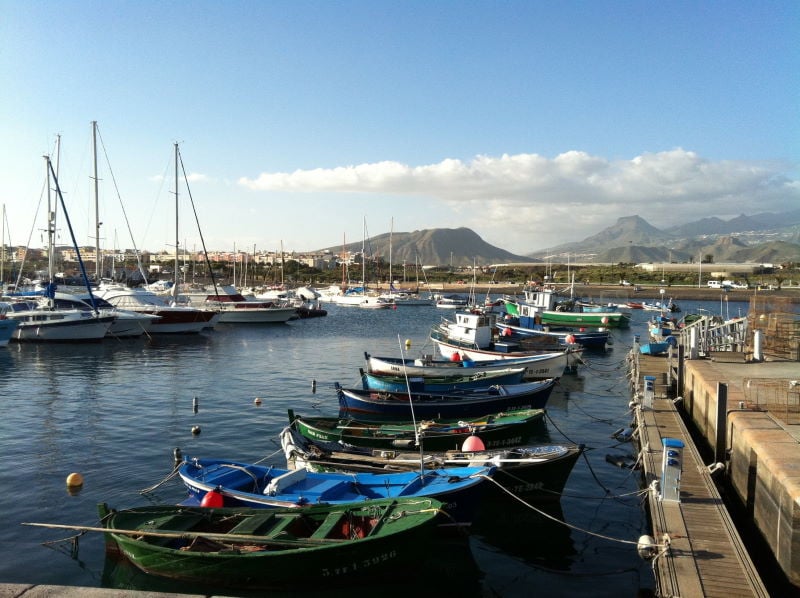
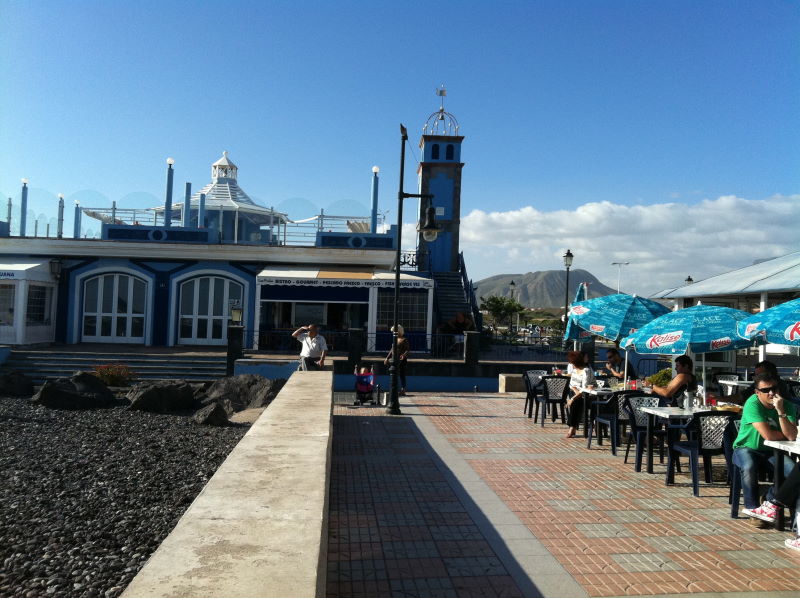
Las Galletas on the south coast of Tenerife is a typical Canarian village with narrow streets and a picturesque harbour with small fishing boats. The seafront promenade is lined with restaurants and cafe bars where you can relax in the sun overlooking the Atlantic Ocean.
Las Galletas is very close to Costa del Silencio and only a short drive from Los Cristianos and Playa de las Americas.
Where is Las Galletas
Las Galletas is located in the municipality of San Miguel de Arona on the south coast of Tenerife approximately 13km by road from the resorts of Los Cristianos and Playa de las Americas, and 14km from Tenerife south airport. You can see the location of Las Galletas in Tenerife on our map.
Las Galletas Nightlife
In the evenings the town comes to life when locals come out in the warm evenings for a walk along the promenade, or for a drink or dinner in one of the many excellent restaurants Las Galletas has to offer. There are plenty of speciality restaurants offering fresh fish caught by the local fishermen as well as other Canarian dishes.
The nightlife in Las Galletas would be considered low key and Spanish in style. It is a small village, so there are no wild nights to be had here, and no theme bars or night clubs etc. It is much quieter than the large resorts around Las Americas. So if you are after all-night partying this is not the place for you.
Las Galletas Beaches
Las Galletas has a small beach of black volcanic sand and rocks, where you can hire umbrellas for shade, and is popular with sunbathers during the day. The ocean water is crystal clear and is suitable for bathing. The beach facilities include showers to wash off the sand.
The beach attracts local surfer and bodyboarders during the evenings, and the waters clarity makes for excellent diving.
Take a look at our photos of Las Galletas.
Tenerife South Airport to Las Galletas Transfer Times
The distance from Tenerife Reina Sophia Airport to Las Galletas is approximately 19km by road taking about 20 minutes. The taxi fare from Tenerife Sur airport to Las Galletas will cost about 27 Euros. There is a direct bus service to the resort, route 415 headed to El Fraile goes from Tenerife South airport direct to Las Galletas.
Places to Stay in Las Galletas
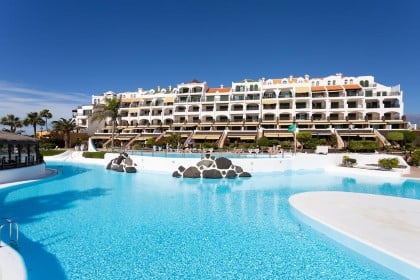
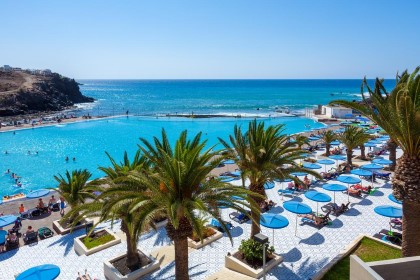
Playa de las Americas Tenerife Review
Playa de Las Americas, Tenerife's busiest resort, is a purpose-built, modern, well planned and clean resort on Tenerife's sunny south coast, with palm tree-lined avenues and some impressive hotels and apartment blocks.
Playa de las Americas is a lively resort with its nightlife, water sports, deep-sea fishing, windsurfing, diving, jeep safaris and many other activities. The chic shopping centres have some very high-quality shops and designer boutiques, and at night they transform into a centre for nightlife with trendy bars and stylish restaurants.
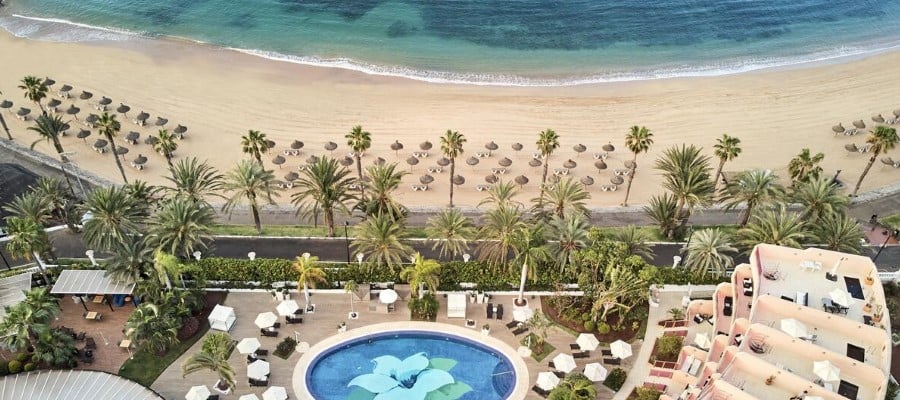
The seafront traffic-free promenades are lined with cafés, restaurants and shops, all the way from Los Cristianos right up to Puerto Colon, and are open all day up to about 11pm, so you can dine at lunchtime, afternoon and in the evening overlooking the sea.
Great effort has been made to improve the resort, it has really shed its past tacky image of under 25's partying and drinking to excess, and the place is now very stylish and sophisticated with tourists of all nationalities filling the resort. The days of cheap booze and fish and chips have been replaced by a more sophisticated and cosmopolitan feel.
Playa de las Americas is mostly a low rise resort with only a few high rise hotels. Nearly all Playa de las Americas resort hotels have swimming pools and subtropical gardens . Take a look at our Playa de las Americas Resort photo gallery.
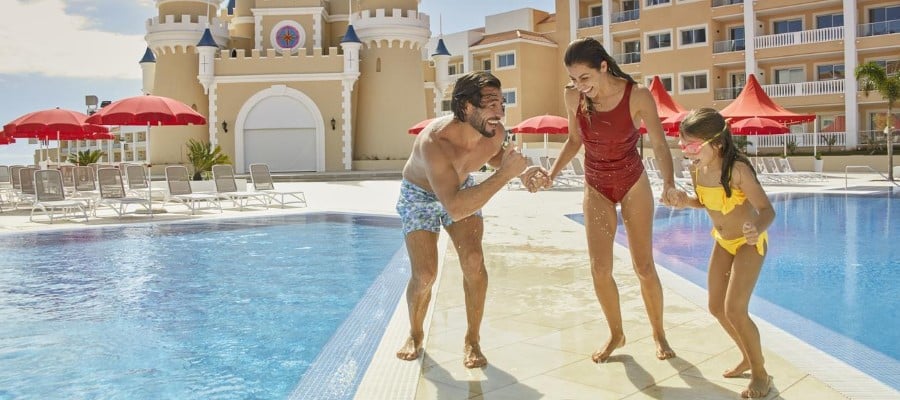
Where is Playa de las Americas
Playa de las Americas is situated on the southwestern coast of Tenerife in the municipality of Arona. The resort is located between Los Cristianos to the south and Costa Adeje to the north, these resorts have now effectively merged into one large resort. Its position is marked on the Playa de las Americas map by the marker.
Playa de Las Americas Nightlife
Playa de las Americas is probably the most lively holiday resort in Tenerife, with an abundance of nightlife including restaurants, clubs, bars, discos and pubs. These include international restaurants, Spanish, Chinese, Indian, Italian, Mexican and pizza parlours.
The centre of Playa de las Americas at night is a vibrant, glitzy array of boutiques, restaurants, cocktail bars and hotels. The place is lit up with luminous decorations, and water jet fountains timed to classical music. The resort is busy with international tourists from the early evening to midnight when it goes quiet, apart from some late-night bars.
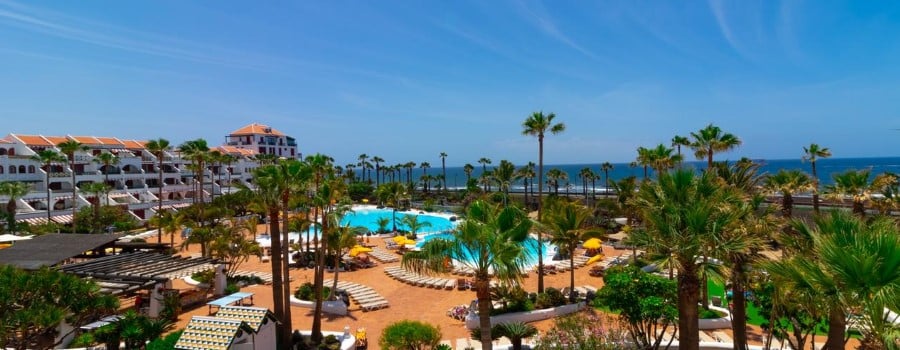
Playa de Las Americas also has a vast selection of restaurants and bars scattered around the resort where you can enjoy an evening out. The noisy clubs and bars designed for the younger visitors are now mostly contained in the Veronicas area. Here bars and clubs are booming out dance music until dawn, the place livens up after midnight and is the place to party for the under 25's. You will want to avoid this area if you don't enjoy the loud, brash nightlife, it is aimed at young people wanting to stay out all night partying.
If you are a mature night owl, the area known as 'The Patch' is where you will find bars hosting live music, cabaret acts and comedians.
Playa de Las Americas Attractions
The resort also has two of the best Golf courses on the island on its outskirts at Golf las Americas and Golf Costa Adeje, both are 18 hole courses where buggies and clubs can be hired. Visitors are welcome at both courses.
There are four theme parks and Tenerife zoo and Monkey Park near the resort with free shuttle buses from the leading hotels. The Aquapark and the newer Siam Water Park make a great alternative to the beach and are excellent for families with children.
Playa de Las Americas Beaches
There are several lovely beaches in Playa de las Americas all are sandy and are equipped with sunbeds and parasols and do get very crowded in the summer months. The beaches are manmade with imported golden sand from the Sahara desert, and are well kept and clean and sheltered from the Atlantic swell by manmade piers made from giant boulders. Water sports are available from the beaches, such as paragliding and water rafting.
Along the beach is a tree-lined promenade where you can walk to the more laid back resort of Los Cristianos or Costa Adeje, where there are also cafes and restaurants where you can take a drink or have some lunch overlooking the ocean.
Tenerife South Airport to Playa de las Americas Transfer Times
The distance from Tenerife South Airport to Playa de las Americas is approximately 20km by road, that takes about 25 minutes. The taxi fare from Tenerife south airport will cost about 34 euros. The bus route 111 will take you from the airport directly to Playa de las Americas. How To Get To Playa de las Americas From Tenerife South Airport.
Places to Stay in Las Americas
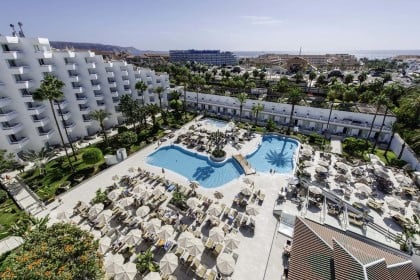
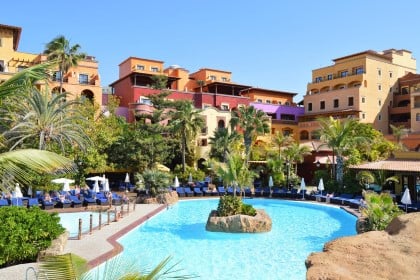
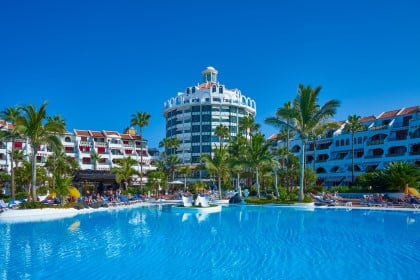
All About South Tenerife
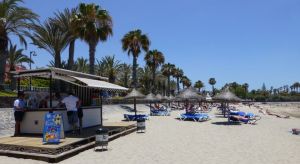
Until the 1960’s South Tenerife was for the most part deserted. Then tourism arrived, the potential was fully exploited, and mass development has continued ever since.
The south of Tenerife has a barren landscape and has very few scenic attractions, but the area’s big advantage is its weather. The coast of south Tenerife has almost year round sunshine, whereas inland can be wet and cloudy, and the Northern resorts of Tenerife don’t enjoy the same amount of sunshine due to cloud cover accumulating under mount Teide.
The difference between the lush subtropical north, and the barren south and centre can be quite a shock, but this climatic and geological contrast adds to Tenerife’s fascination.
The main resorts of the south west of Tenerife are Playa de las Americas, Los Cristianos and Costa Adeje. Los Cristianos was once a poverty stricken hamlet and barren volcanic desert, but Playa de las Americas and Costa Adeje were built as resorts from scratch. All three resorts have now merged to form a huge tourist urban playground of apartment blocks and hotels which sprawl up the hillsides.
There is a huge variety of restaurants, bars and clubs for the younger fun seekers. There are also a number of theme parks that are very popular with families and these can be easily reached via free shuttle busses. If water sports are your thing you won’t be disappointed as there is a full range of water sports available.
Further north along the coast are the quieter resorts of Los Gigantes and Puoto de Santiago, which are set against huge volcanic cliffs. The landscape inland is barren and uninspiring with a couple of notable exceptions at Masca and Barrance del Infierno, which are superb for walking. If you like walking, you can walk from the village of Masca, down the Masca gorge to the coast and then catch a boat along the coast to Los Giganties.
Many come to South Tenerife for the sunshine only, which is a shame as the North of Tenerife is full of culture and natural wonders.
All About North Tenerife
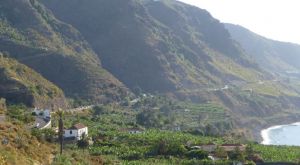
North Tenerife is without a doubt the most attractive part of the island, but it is cloudier and wetter than the arid south. These conditions are created by the trade winds from the Atlantic getting trapped by the mountain and rising and cooling to form cloud. This allows for the growth of subtropical plants such as bananas.
The scenery change from the south is quite dramatic, with lush vegetation and green mountain sides that bear testament to the rain fall this side of mount Teide.
This part of the island, especially around the Orotava valley and Puerto de la Cruz, is prone to cloud cover even in the summer months. In winter, particularly January and February, you could be seeing more cloud and rain than sunshine. So if you are looking for winter sunshine then you will be better off going to one of the resorts on the south east or south west coasts. If the sun is not important, this part of Tenerife has much to offer.
This northern strip of Tenerife is the most interesting for the visitor to Tenerife with low key resorts, historical towns, fishing villages, weird trees, banana plantations and rugged mountain terrain.
The main resort along the North Tenerife coast is Puerto de la Cruz, which is an interesting town that has preserved some of the charm of its old centre. It also suffers from modern tower block hotels that were built in the 1960’s tourist boom, but the old town is very pretty. It is also Tenerife’s second most important town after Santa Cruz.
The old town of La Orotava is situated up the hill side and has preserved its historical centre with its colonial houses and public buildings. The town is the best historically preserved in the whole of the Canary Islands, with marvellous houses and mansions built in the 17th and 18th centuries.
Icod de los Vinos is as its name implies is the wine making centre of Tenerife. It also has a Dragon Tree that is reputed to be over 1000 years old; the tree alone pulls in the visitors from all over the island.
Further west is the old capital of Garachico, which was Tenerife’s largest port until it was destroyed by a volcanic eruption in 1706. None of the original town remains from its commercial heyday, however it is today one of Tenerife’s most charming small towns.
Masca is truly one of the must visits on Tenerife. It is a tiny hamlet with no traffic and some absolutely dramatic scenery. You can hike down to the sea and back, which will take 6 to 7 hours!