
Items filtered by date: June 2026
Jane the Tourist in Candelaria
Jane the Tourist Opinion.
Candelaria is a coastal town about twelve miles south of Santa Cruz. This delightful traditional fishing town has an unusual past, which I found very interesting. I am staying just outside Candelaria at Las Calletillas at the Hotel Catalonia Punta del Rey. This hotel has nostalgia about it, and feels like it is lost back in time. There is a very large dining area, this looks out onto a rock garden with a pond and waterfall.
We booked a room that came with buffet breakfast, so I can only comment on this. Room clean and comfortable, for breakfast I had fruit juice, bacon, eggs, tomato, beans, and sauté potatoes, followed by coffee, croissants, little pastries and fruit. This was just my choice, there was so much more! We only had a few nights here & enjoyed.
However the resort is low-key and evening entertainment would be limited to the local Spanish restaurants or what was provided in the Hotel. Last night we went to the Show bar, it reminded me of a ball room. Light entertainment is put on every night, and there is dancing to suit all age groups. Which brings me to say the age group here is older, that is fine by me as they know how to behave themselves! The price will vary here depending on how and when you book. We booked the same day as we arrived, which gave us a room with buffet breakfast for 50 Euros a night. If you just want to laze around during the day there is a pool here. Or you can take a stroll along the promenade, and this is what I did.
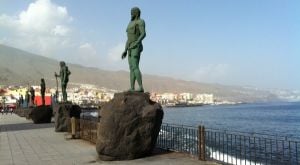
The promenade goes right along to the main town of Candelaria, there are plenty of cafes, bars along the way if you want to take a break. Once we reached candelaria we had our picnic lunch on the beach I bought mine (the hotel does provide a packed lunch if you want) the main focal point of Candelaria is the church, which is characterised by a tall bell-tower. It is worth having a look inside the church. Along the waterfront stand nine outsize statues. These wild looking men are Guanche chiefs. It is Guanche society that I want to tell you about. If you have any interest in history or Tenerife then read on.
When European exploration of the islands took place in the 14th century, they found these primitive people living here. The guanches were unusualy tall, blonde and blue-eyed. Mystery surrounds how they got to the canary Islands, as they appear to have no knowledge of boat building.Their origin is not certain although most experts believe they were from North Africa. They had a primitive way of life, most lived in caves, high status Guanches had stone houses with straw roofs. The women played a full part in society, and made pots that were highly decorated. They reared cattle and grew crops.
Clothing was made from sheep or goatskins. These animals also provided them with meat, cheese and milk. Their diet also consisted of fish, fruit and gofio, a roasted cereal flour. They worshiped a god, who was closely linked with the sun, hell was believed to be in the Teide the volcano! The Guanches mummified their dead, this treatment was mostly for chiefs and nobles. They were laid out in distant burial caves. Some examples have survived to this day. How they learned these techniques and why they adopted them is a mystery just like the Guanche people themselves.
Written by Jane Goossens.

Jane the Tourist
Candelaria 5 Day Weather Forecast
Last Minute Late Holiday Deals to Tenerife
Select your airport departure region by clicking on the appropriate link. The system will then search for the best cheap last minute holidays to Tenerife from many different holiday suppliers in the UK, to bring you the very cheapest late deals to Tenerife leaving in the next 4 weeks.
Our search boxes below compare last minute holidays to Tenerife from top UK travel companies to find the best deals. Find out more about the islands resorts by reading our tenerife resorts page.


Last Minute Holidays to Tenerife for Under £800pp
7 Night Last Minute Holidays to Tenerife
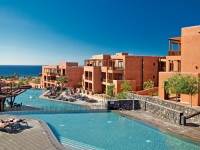
14 Night Last Minute Holidays to Tenerife
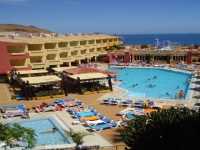
Last Minute All Inclusive Holidays to Tenerife
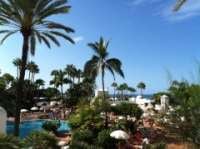
4* Last Minute Holidays to Tenerife
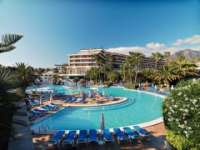
5* Last Minute Holidays to Tenerife
Tenerife Flights
Use our flight search engine to help you choose the cheapest flights to Tenerife. The flight search will check multiple suppliers of Tenerife flights to find the best deals. Be aware of the extra charges the airline add to the basic cost of the flight such as hold baggage, as the price quoted does not include these extras.
Some airlines have different dimensions for hand baggage they allow on the their flights, so check the size allowed for your hand baggage, as you will be forced to check them in as hold baggage if they are over sized. They will charge you for this at a higher rate than the cost of checking baggage in online, if you get this wrong you will in for substantial extra costs.
Make sure that the hand baggage weight is within the allowed quota as the same applies, you will be forced to check your hand baggage in as hold luggage with the associated extra costs of checking these in at the airport.
Some airlines charge a fee for using a credit or debit card, this fee can be avoided by using a pre paid card such as FairFX MasterCard. These cards are used just like a credit card except that you pre load them with money before use. You can apply for on here.
If you are travelling to the airport by car you can book your airport car parking in advance, this is also considerably cheaper if you book this in advance. You may have to book up to 48 hours before your departure to get the discount.
You can book your airport car parking on this web site after your have booked you Tenerife flight by going to the Airport Car Parking Page.
La Laguna Tenerife
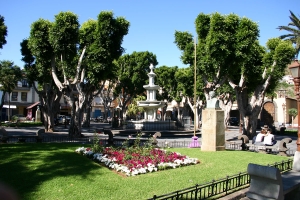
The city of La Laguna is Tenerife’s oldest settlement being founded by Alfonso Ferdández in 1496 after he had conquered the island. It is here that the Guanches were finally defeated. The town was the capital of Tenerife until 1723 when Santa Cruz took over that roll.
La Laguna is situated 550m above sea level and the climate is somewhat cooler than on the coast. The city got its name from a lagoon that was here, but it was drained in 1837 then filled in and built over. La Laguna has been a UNESCO world heritage site since 2000 due to its historical old town to the north, where its shopping and commercial centre is located. This part of the town still retains its original street plan and is full of historical buildings made of stone, with patios full of flowers and typical Canarian wooden balconies.

The old town is full of convents, monasteries and churches. To the south of the city centre is the modern part of La Laguna, where the university and the Science and Technology Museum is situated and contrasts with the ancient northern part of the city. The university is home to around 13000 students and they create a lively atmosphere in the city.

The Canarian Astro Physics Institute is associated with the university, and the observatories on Mount Teide and on La Palma are run by the institute. The Museum of Science and the Cosmos is also owned by the university, and there are some fascinating hi-tech hands on presentations. For example you can take a lie detector, see your own skeleton and communicate with outer space.
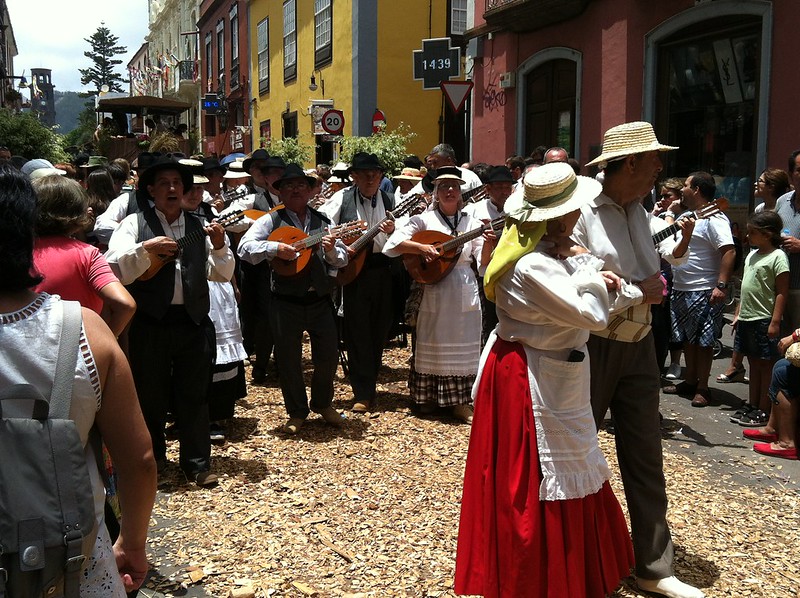
The city doesn’t attract many tourists, which is a bit strange, as it is a fascinating historical city and is one of Tenerife’s gems.
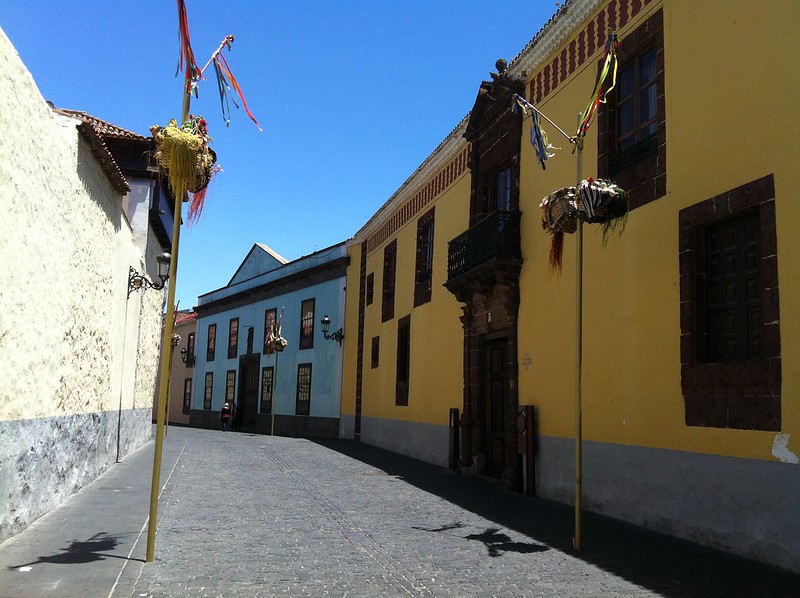
Where is La Laguna
La Laguna is situated in north Tenerife in the Aguere Valley above the capital city of Santa Cruz and close to the north Tenerife airport of Los Rodeos. La Laguna is approximatley 78km by road from Playa de las Americas and will take about 1 hour.
Icod de los Vinos Tenerife
The small town of Icod de los Vinos is in the centre of the wine growing area of Tenerife and the hills behind the town are full of terraces growing vines. Icod de los Vinos and has its own wine festival in November, the Festival of San Andrés, when the wineries have an open day and the custom is for the youths to hurl themselves down the steep Calle Calvario on wooden sledges. This tradition is believed to have originated from the times when logs were rolled down the hill to the Bay of Marcos for the construction of ships.

Icod is most famous though for its ancient Dragon Tree that is reputed to be over 1000 years old and stands at 16 m tall and 6m in diameter. The Dragon Trees sap turns red on contact with the air and was known as dragon’s blood in medieval times and was used for medicinal purposes. The sap was also used as a natural dye to varnish musical instruments, stain marble and was also used as a cosmetic. It is believed that the Guanche people administered justice from beneath its branches and that the Guanche held their Dragon Tress in high reverence.
Around the Dragon Tree is a small botanical garden that includes several young Dragon Trees that look rather insignificant next to the old boy.

There is a lot more to see in Icod. There is the 16th century church of San Marcos near the dragon tree set in a shaded square with laurels and palms. Take a look inside where there is a huge cross from Mexico which is 2m high and is thought to be the largest silver filigree cross in the world.
Take the steep lane from the church to the Plaza de la Constitución where you will find the square that looks just as it would have done 200 years ago. This is one of the finest squares on Tenerife with a fountain surrounded by palms, laurels and oleander. The square is full of fine old trees and ancient buildings and bodegas. Here there is also a Doll and Puppet Museum located in a Canarian mansion.
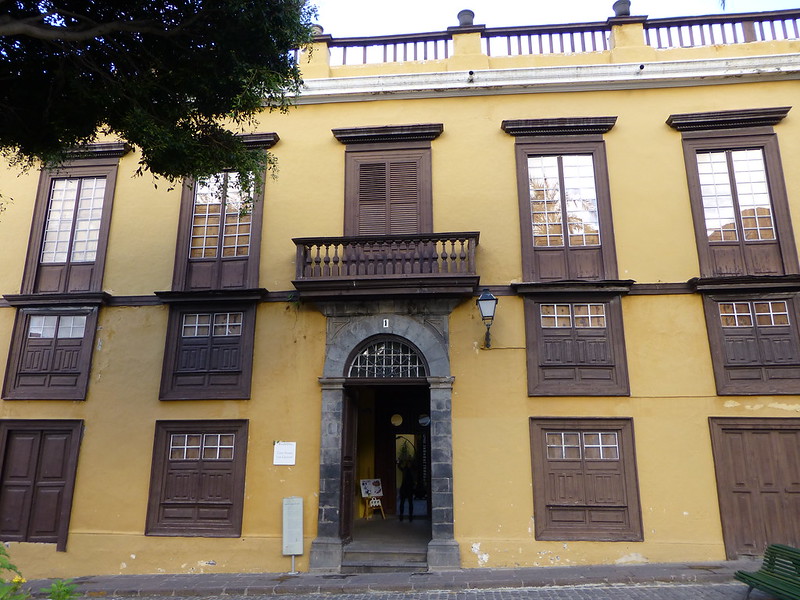
Below the Plaza is the Mariposario del Drago butterfly Zoo, where hundreds of exotic butterflies for all over the world can fly around in total freedom in a beautiful garden. You can see the whole life cycle from egg to butterfly.
Just down the hill from here is the village of Playa de San Marcos, which is now developing into a resort. Here you will find a small back sand beach with a promenade with bars and restaurants, and is a nice place to relax with a drink and enjoy the sun and sea breezes.
Where is Icod de los Vinos
Icod de los Vinos is located in north west Tenerife close to the costal village of Garachico. It is an inland town and is at an altitude of 253 meters, its position is shown on the map below.
Icod de las Vinos Rentals
See map for Hotels, Villas and Apartments in Icod de las Vinos. Choose the travel dates for your Tenerife holidays to see availability and prices of accommodation.
Booking.comMount Teide Tenerife
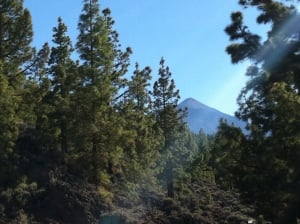
Mount Teide dominates Tenerife and can be seen from all over the island, and is a must visit for any visitor to Tenerife. In winter the temperatures drop below freezing, and in the summer if there is a wind blowing it can be cold. Conditions can change rapidly, a warm morning can turn into a freezing afternoon. You should always take a warm jacket, trousers and hiking boots, along with your sunglasses, sun block and a hat.
There is a cable car that will take you to the peak of Teide from the caldera were there are stunning views of the whole of the Canary Islands.
In winter Teide is often covered in snow and you can ski there when the conditions are right.
Mount Teide Goelogical History
Tiede is a stratovolcano that grew out of the Canadas caldera about 600,000 years ago. The Tide complex is not extinct as you may read elsewhere, but is an active volcano that is currently dormant; the last eruption was in 1909 from the El Chinyero vent. An eruption from the Mountanas Negras in 1706 destroyed the town of Garachico and several small villages.

Tiede stands at 3718 m/12,195ft above sea level and is the highest mountain in Spain and of the Atlantic islands. It is the 3rd largest volcano in the world, measured from its base on the sea floor it stands at 7500m. Teide has been designated a decade volcano as a volcano of special interest, due to its proximity to large human populations and history of destructive eruptions.
Teide is just the latest of several volcanos to soar above Tenerife and stands in the Canadas Caldera which is the remains of a previous much larger volcano that is thought to have undergone a catastrophic collapse. Tiede and its sister volcano Pico Viejo (3134m) have erupted from the floor of the caldera on its northern edge.

In recorded history the eruptions have been from the NW rift at Boca Cangrejo in 1492, Montañas Negras in 1706, Narices del Teide in 1798 and El Chinyero in 1909. The NE rift had volcanic eruptions in 1704 and 1705.
Teide National Park was declared a UNESCO World Heritage site in June 2007.
Tenerife Top 10 Attractions
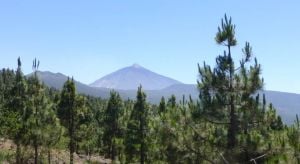
Mount Teide: Tenerife’s main attraction, the Las Cañadas caldera and the Teide volcano, the highest Spanish mountain. Dramatic lunar scenery and national park. Spain’s highest mountain, take the cable car up to the peak.
Parque Nacional de las Canadas del Teide: the park around Teide, used for film sets and full of amazing scenery.
Museo de la Naturaleza y el Hombre: the best museum in Tenerife, Santa Cruz.
Playa de las Teresitas: the best beach on Tenerife manmade with golden sand from the Sahara desert, near Santa Cruz.
La Orotava old town: The best examples of old Spanish colonial architecture on the island. Visit the old town with its ancient streets and Canarian buildings with traditional wooden balconies and court yards.
Punta de Teno: The wild western point of Tenerife. Fantastic views down the Teno Massif and across to La Gomera.
Masca: A hamlet perched on the slopes of the Teno Massif untouched by time.
The Cliffs of Los Gigantes: The cliffs are an awesome sight and are the result of Tenerife’s natural history that being volcanic eruptions and coastal erosion.
Anaga Mountains: These are the rugged mountain terrain on the north eastern tip of Tenerife that is covered in dense forest with nature trails you can walk. There are some charming villages untouched by tourism.
Garachico: The old port destroyed by volcanic eruption. The village is charming, with its rock bathing pools and old convent.
Tenerife Beaches
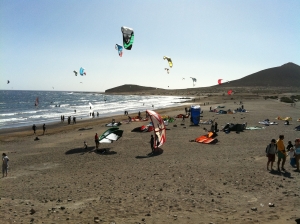
Tenerife has a reputation for sun, sea and sand, so it may be surprising to learn that there are very few natural Tenerife beaches. The natural beaches there are, are formed of black volcanic sand, pebble and volcanic rock. Many visitors are disappointed that the golden sand of the Mediterranean is absent.
Tenerife has worked hard to counteract this natural shortcoming by importing a massive amount of sand from the Sahara desert to create artificial beaches and have created seawater pools to swim in safety.
Tenerife has nearly 400km of coast line bathed by the Atlantic Ocean and the beaches usually have amenities for bathers. Some beaches are enough calm where you can take a dip with the family, or wild and windy where the surfers rule.
Playa de las Teresitas is the undoubtedly the best on the island. It is entirely manmade from sand imported from the Sahara desert in the 1970’s. A manmade stone reef protects the beach from storms and ensures safe swimming. The beach is 2km long and has plenty of facilities including palm trees to provide shade, beach bars, pedaloes and a wind surfing school.
Playa de las Americas has three small manmade beaches of sand imported from the Sahara desert that are well kept and clean. Backing the beaches is a palm tree lined promenade with cafés, bars and restaurants, many serving excellent food. The beach at Playa de las Vistas is very impressive and has an off shore fountain.
El Médano has the best of the natural beaches on Tenerife and is comparatively wild and empty. The beach here catches the full force of the trade winds and has become a haven for windsurfers.
There are some glorious Tenerife beaches but they are few in number and the best ones are manmade. There is however some totally unspoilt natural beaches of black sand that remain hidden from the uninformed tourist.
Where the coast is rugged there has been created some wonderful natural seawater swimming pools at places such as Los Gigantes, Garachico, Bajamar and Punta del Hidalgo and theLago Martiánez in Puerto de la Cruz and César Manrique in Santa Cruz which were both designed by the Canarian artist César Manrique.
Driving on Tenerife
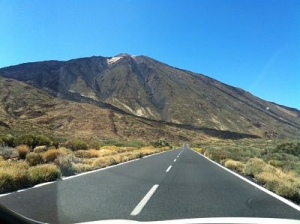
The roads in Tenerife are, for the most part, in good condition. The traffic is lighter than in the UK. The exceptions are in the city areas and some junctions approaching the TF1 motorway during rush hour.
The TF1 motorway links the island from Adeje and the southern resorts and runs to the south tip of the island, following the eastern coast up to Santa Cruz in the northeast. From here, it goes north past La Laguna and back down to the island's northern coast, heading west past Puerto de la Cruz and ending at Los Realejos. The TF1 motorway is currently being extended from the western coast to the north.
Some roads in the mountains twist and turn with some precarious hairpin bends over high cliffs, and there is often mist and fog at altitude. Some petrol stations in rural areas are closed on Sundays and public holidays.
Frequently Asked Questions About Driving In Tenerife
What Side Of The Road Do You Drive In Tenerife?
On Tenerife, we drive on the right-hand side of the road, the same as in Spain and mainland Europe, with the driver controls fitted on the left side of the car.
Do You Have To Wear Seat Belts When Driving In Tenerife?
Wearing seat belts is compulsory; children under 3 years old must travel in fixed child seats, and children under 12 must not travel on the front seats.
What Are The Speed Limits In Tenerife?
Speed limits on Tenerife are as follows: towns 50km/31mph, rural roads 90km/55mph and motorways 120km/74mph.
Do Motorcyclists Have To Wear Helmets In Tenerife?
Motorcyclists must wear crash helmets when riding a scooter or motorcycle.
Can The Police Issue On-The-Spot Fines In Tenerife?
Motoring offences are penalised with on-the-spot fines, and visitors are subject to substantial penalties. Breath tests are carried out randomly, and the blood alcohol limit is 0.08%.
Do you Need An International Driving Permit To Drive In Tenerife?
You do not need an International Driving Permit to drive in Tenerife if you have a photocard driving licence issued in the UK.
How Old Must You Be To Hire A Car On Tenerife?
You must be at least 21 years old and have held a driving licence for over a year; you will also be required to produce a valid licence.
Are There Parking Restrictions In Tenerife?
There are parking restrictions on busy streets in Santa Cruz, Playa de las Americas and Puerto de la Cruz; you will need to buy a pay and display parking ticket or risk your car being towed away.