
Royal River & Spa Luxury Hotel In Costa Adeje Chosen As The Best Hotel In Spain
Tenerife's Restaurants Closing Time Brought Forward To Midnight
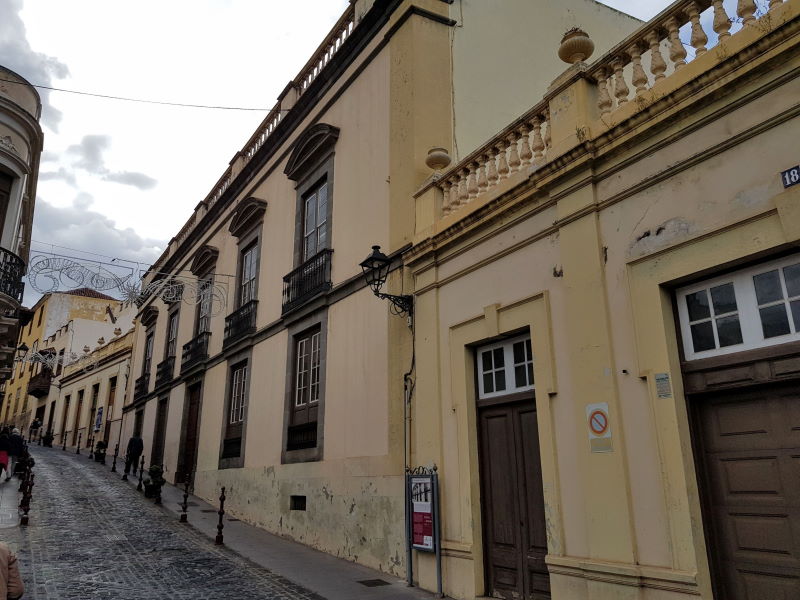
Casa Benitez de Lugo Vina
Records of this building were already in place in 1588 when it was part of the estate assets founded by Francisco Benítez de Lugo y Cabrera. The house is part of an extensive plot stretching from Calle de la Carrera to Calle de Los Alfombristas. Early in the nineteenth century, engineer José de Betancourt y Castro was commissioned to carry out a renovation project to completely change the house's internal structure. Further internal reconstruction was carried out in the twentieth century when the house was owned by Ana Massieu de las Casas. The appearance of the façade indicates the importance of neoclassicism which is widely used in the surrounding architecture.
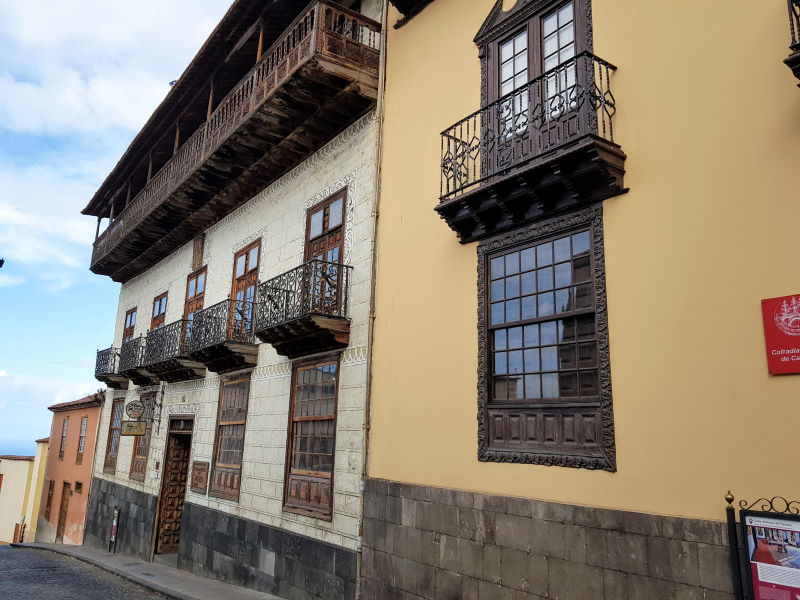
Casa Mendez Fonseca
The house, also known as 'Casa de los Balcones', was built on a plot given as an endowment by Diego González Nieto to his niece Juana Nieto after her marriage to Captain Juan de Castro Bazo y Merino in 1657. They built one of the most important buildings in La Orotava in the 17th century, based on the neighbouring Jiménez Franchy house. It is decorated with a unique sgraffito solution. The house is built on a large irregular plot, and its structure originates from a courtyard. The façade is split into three floors, with sash windows on the ground floor, wrought-iron balconies on the middle floor and an elegant wooden balcony on the top floor. The carpentry work on the galleries, windows, doors and balconies has been praised over the centuries for the quality of the craftsmen.
Casa Jemenez de Franchy
This house was commissioned by Marina Jimenez Fonte del Castillo and was built about 1642 and extended a century later. The house has three windows rather than four, so the front door is not in the facade's centre. The carvings on the ground floor windows and the four animals above the first-floor windows show the skill of the local artisans. The balcony is similar to the next-door building creating a unique layout.
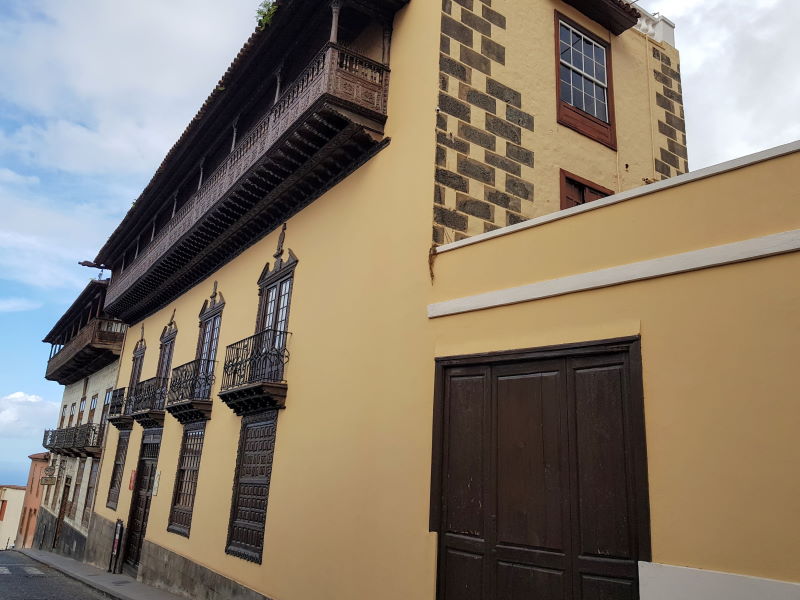
Casa Diaz Flores
Since the early eighteenth century, the plot occupied by this house had been the site of the College of San Luis Gonzaga, run by the Jesuits. After confiscation, the premises were put to other uses, most notably the Town Hall. However, in 1841 the house was destroyed by a fire and then rebuilt with the current design overseen by Antonio Díaz Flores y Vera. This is another example of the romantic classicism so well received in La Orotava. From 1862 until the beginning of the twentieth century, the house was a hotel whose guests included Richard Francis Burton and the British watercolourist Elizabeth Murray. Interesting carved stone elements from the original Jesuit buildings are preserved in the garden.
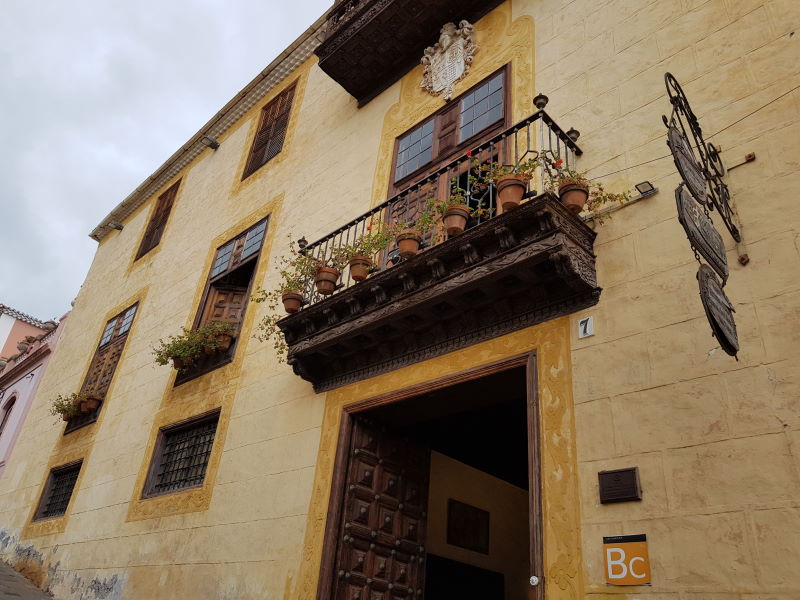
Casa Ponte Fonte - Casa Lercaro
In 1654 Jerónimo Ponte Fonte y Pagés ordered this house to be built after his marrage to Catalina Grimaldi Rizzo de Lugo. The large plot allowed new sections to be built and now has a unique J shaped footprint. The size of the house means it has had many uses over the years, including a family residence, warehouse and a drying facility for locally grown tobacco. The façade is designed in the symmetry characteristic of the time. It is adapted to the steep incline of the road, which determines the arrangement of the façade's windows and doors, with openings of varying sizes on the ground floor. Highlights include the sgraffito and the originality of its four balconies, made of wood and iron.
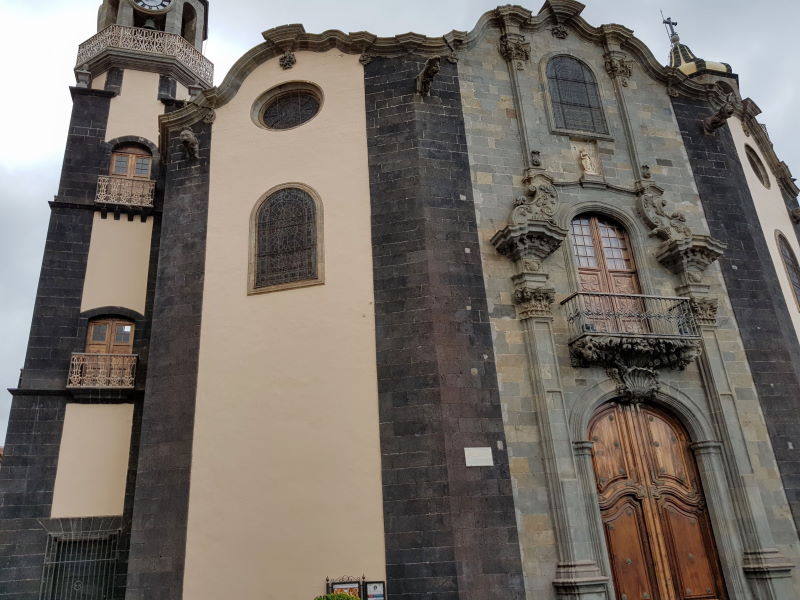
Iglesia de Nuestra Señora de la Concepción
Historical records date back to 1503 and are connected to the town's origins and later trajectory. The current Church is the third to occupy the site since 1515 and was built between 1768 and 1788 under stonemason Patricio José García and carpenter Miguel García de Chaves. Financed with alms from American trade sanctioned by King Carlos III, the Church received significant financial support from many emigrants, especially those residing in Cuba, known as Indianos. The outside bears finely wrought eighteenth-century detail. The inside is a classical basilica shape structure with three naves, barrel vaults and a dome supported by pendentives. It also features a collection of artefacts of different styles and historical periods. The Church was declared a National Historic-Artistic Monument on 18th June 1948.
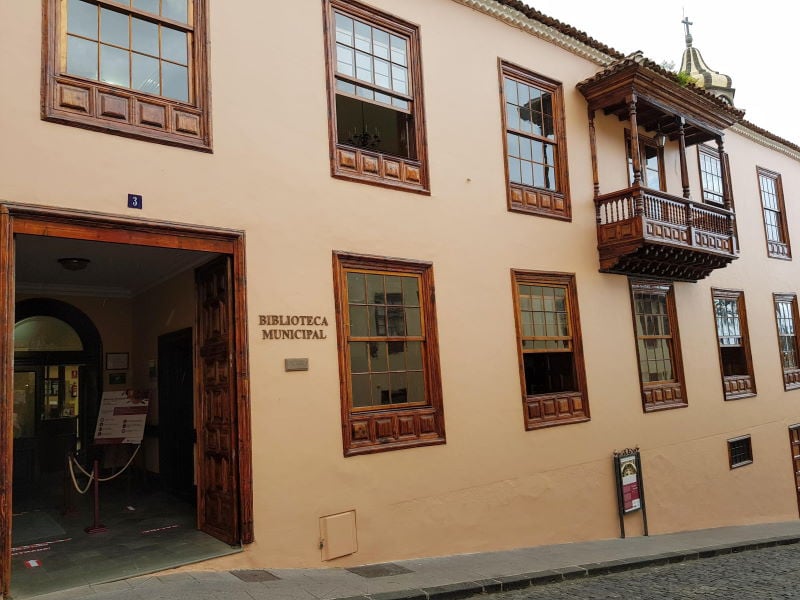
Biblioteca Municipal Fernando del Hoyo y Laura Salazar
In the eighteenth century, this was the residence of Martin Bucaille, the beneficiary of the nearby Church of La Concepción, and his brother Antonio Bucaille, a lawyer for the Royal Councils. It was later passed on to the Conde del Valle de Salazar. It became the Casino headquarters in the twentieth century and is now the Municipal Library. Despite these different uses, the building preserves the wood flooring, staircase and layout around a central courtyard. Of equal interest is its façade, marked by the road's steepness onto which a door opens in its north side, intended for the servants. The second section has a fascinating balcony covered with woodwork demonstrating the predominant architectural types in eighteenth-century La Orotava.
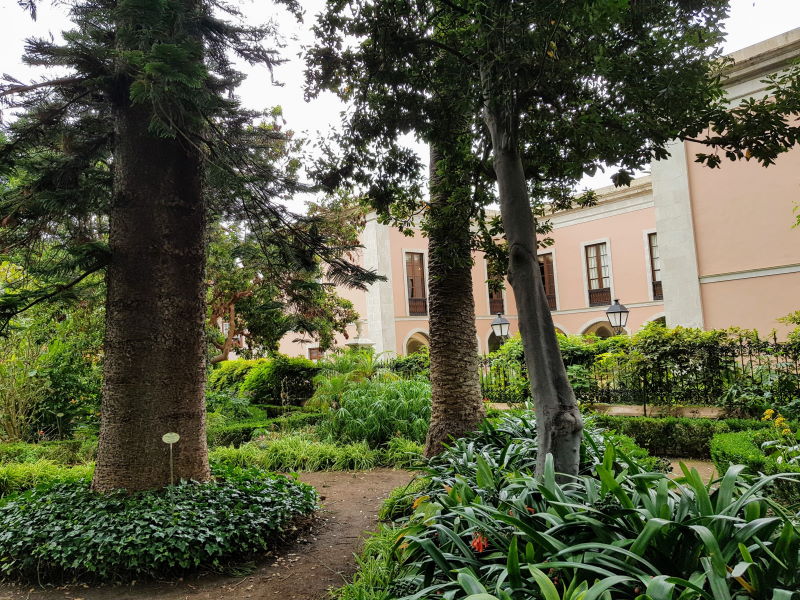
Hijuela del Jardín Botánico
This area was built over the old orchard of the convent of San José after seizure laws were allied when the convent was demolished. It remained an urban plot without any function until the end of the nineteenth century. The plot was then developed as a nursery for plant species to increase the collection at the Botanical Garden of La Orotava located in La Paz plains, once acclimated to the island's conditions. However, most of the species planted have remained here. Most of the plants are of tropical origin, both African and American. You'll also find one of the most impressive dragon trees in La Orotava today. The garden is also home to numerous birds species. On 21st June 2007, by Decree of the Government of the Canary Islands, the Hijuela del Jardín Botánico de Aclimatación de La Orotava was declared an Asset of Cultural Interest.
Victoria Gardens - Masonic Mausoleum - Quinta Roja Pantheon
Originaly part of the Quinta Roja Marquisate mansion until the beginning of the twentieth century, these gardens were initially commissioned to be an orchard by the Marchioness of la Quinta Roja. However, when her son died in April 1880, the Bishopric would not permit him to be buried in the family vault because he was a Freemason, leaving him to be interred in the non-Catholic section of the cemetery. This humiliation led the Marchioness to build the garden with a mausoleum to lay her son's body to rest. She was eventually granted permission to bury their son in the family vault, so the mausoleum was never used. However, it still stands today as a monument against religious intolerance.
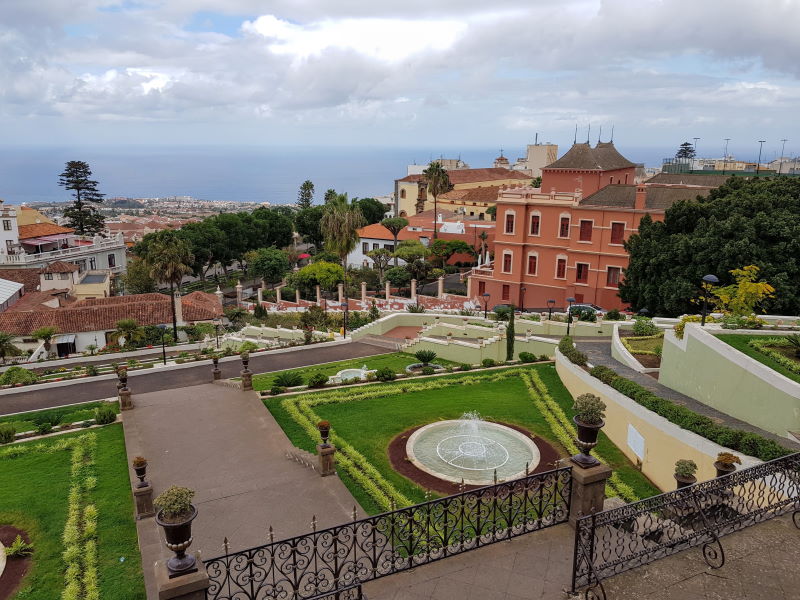
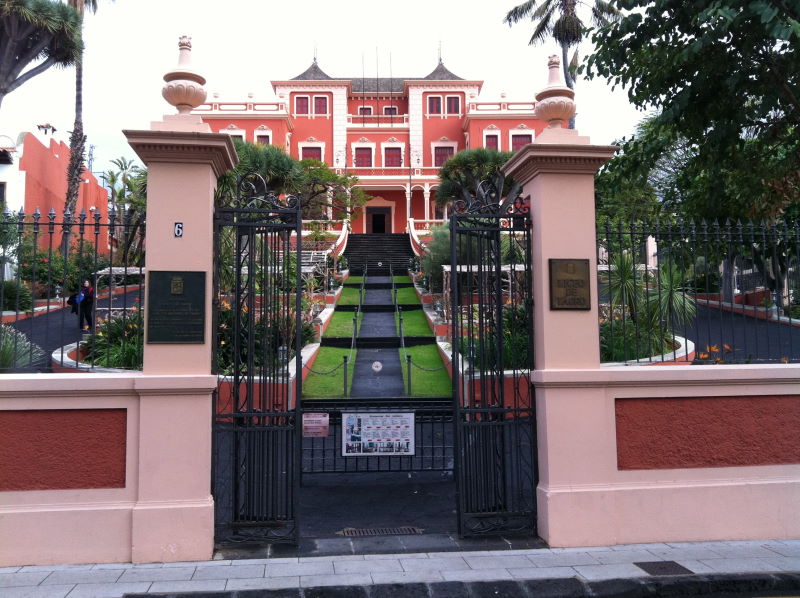
Liceo de Taoro - Casa Ascanio
This mansion was built in 1928 and was the home of the Ascanio family. The building is striking for its imposing scale of unprecedented dimensions at the time, standing on a hilltop overlooking the valley and coastal area of Puerto de la Cruz. The interior reveals its owners' extravagance to invest both the décor and the finishing materials. In addition to its architectural features, the house is surrounded by flower beds and gardens teeming with plants. Since 1975 it has been the Liceo de Taoro Cultural Society headquarters.
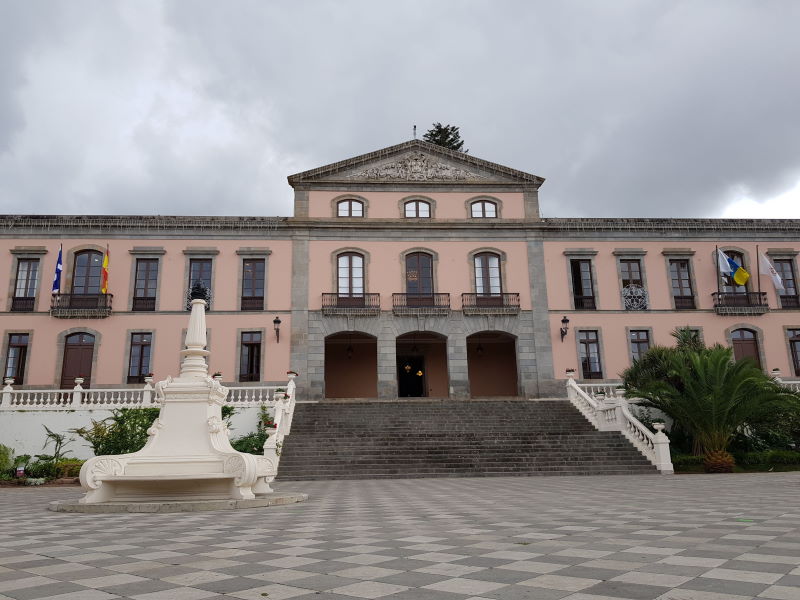
Ayuntamiento - Palacio Municipal
This neoclassical building dates back to the mid-nineteenth century when the old Clarisse convent of San Jose was seized under the Mendizabal law in 1836 and demolished in 1868. The result was the development of four new spaces, including the town hall building, fronted by a large plaza, and the Hijuela del Jardín Botánico (botanic garden) at the rear on the site of the old convent gardens. The area as it is today was inaugurated in April 1912. The town hall is the best example of neoclassical architecture in La Orotava, owing to its layout designed by Pedro Maffiotte and Manuel de Oraá. In 2001, a complete refurbishment was begun, and completed in early 2005.
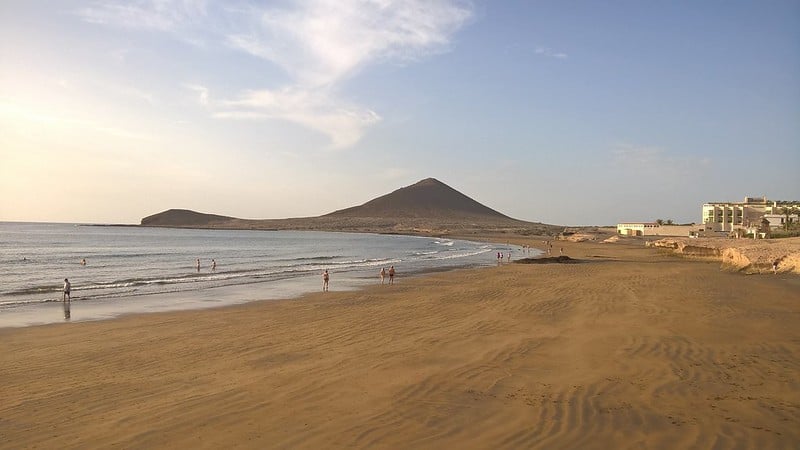
El Médano beach is one of the best in south Tenerife if. It is perfect for water sports lovers and families looking to spend a fabulous day on the beach. This beach is awarded a Blue Flag, guaranteeing top quality services and excellent swimming conditions.
El Medano beach area closer to the town is more suitable for families as the sea is calmer here with gentler waves and shallow water. Further along the promenade, you will find seafront restaurants, buzzing cafés and surf shops. The beach furthest from the town is the best place for windsurfing and kitesurfing, hosting several international competitions, such as the World Windsurfing and Kitesurfing Championships.
El Médano is located in Granadilla de Abona, close to Golf del Sur and Tenerife south airport, famous for its fine sand and views of Montaña Roja.
Read our resort review of El Medano
Frequently Asked Questions About El Medano Beach
Where is El Medano Beach?
El Médano is located in the Munincipality of Granadilla de Abona south Tenerife.
How long is El Medano Beach?
El Médano beach is 750 meters long.
Is El Medano Beach Sandy?
El Médano beach is a natural sandy beach.
Is El Medano Beach Safe For Families?
Yes, El Medano Beach is safe for families.
Places to Stay in El Médano
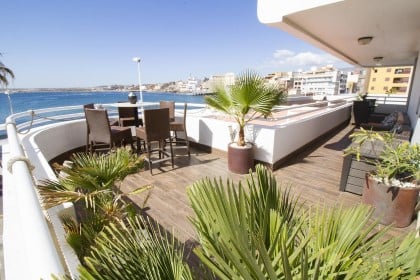
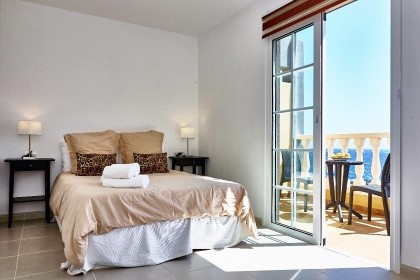
Tenerife's bus service is excellent and economical for getting to your hotel from Tenerife south airport. Various buses go directly from the airport to Costa Adeje, Puerto de la Cruz, Costa del Silencio, Golf del Sur, and the capital city of Santa Cruz. There is also a night bus running between Costa Adeje and Santa Cruz.
The following bus lines service Tenerife south airport to popular resort areas, shown with the final destination.
- Bus Line 40 - Costa Adeje - Tenerife South Airport
- Bus Line 111 - Costa Adeje - Los Cristianos - Tenerife South Airport - Las Caletillas - Santa Cruz
- Bus Line 343 - Costa Adeje - Los Cristianos - Tenerife South Airport - Tenerife North Airport - Puerto de la Cruz
- Bus Line 425 - El Fraile - Costa del Silencio - Golf del Sur - Tenerife South Airport - San Isidro
- Bus Line 711 - (Night Bus) Costa Adeje - Los Cristianos - Tenerife South Airport - Santa Cruz
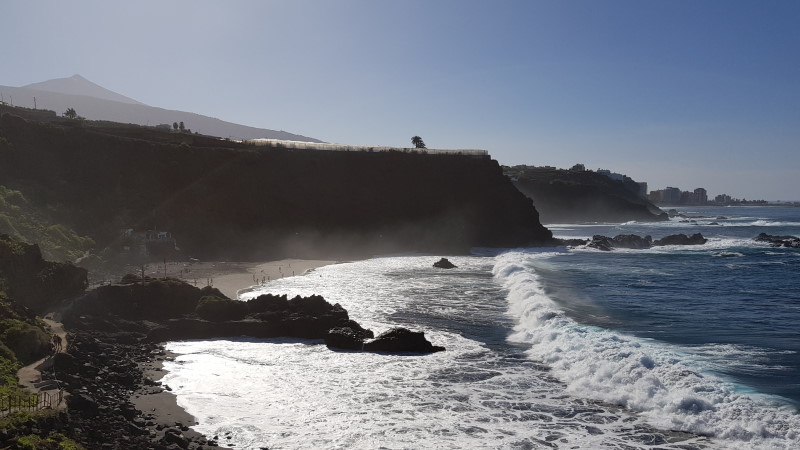
Located at the foot of a cliff in the region of El Rincón (La Orotava), this beach boasts an expanse of black sand combined with volcanic formations rising out of the sea. The beach is isolated and only accessible via many steps.
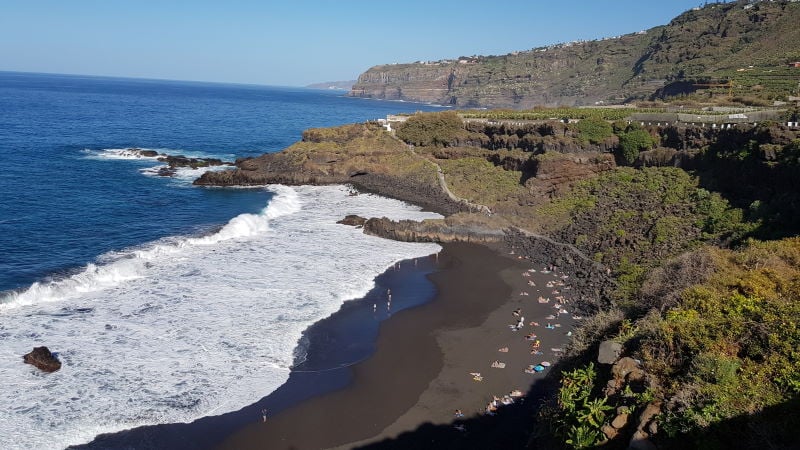
Access to the beach is somewhat limited. However, you can walk from Puerto de la Cruz to Playa el Bollullo, the walk is an enjoyable one through banana plantations and will take about 40 minutes. or from the El Bolullo restaurant (in the region of El Rincón) along a stepped path that takes just a few minutes.
It is possible to buy snacks and drinks on the beach, and there are sun loungers and parasols for hire.
You can reach El Bollullo beach either by car or by walking the coastal path from Puerto de la Cruz. There is a small beach shack, the Chiringuito Bollullo Beach bar, selling drinks and tapas, and above the beach is a good restaurant serving Canarian food, seafood and steaks with fabulous views over the ocean.
There is a lifeguard and sun loungers and parasols for hire during the summer.
The Orchid Gardens of Sitio Litre
The garden of Sitio Litre hosts a collection of almost 200 Orchids, always fresh and in flower, and is the most extensive collection on the island. The garden is a charming combination of English formal garden design and a host of colourful, beautiful tropical and sub-tropical plants. As well as its orchid collection, Sitio Litre is also famous for its Dragon tree, which is believed to be up to 600 years old. However, this specimen is not the oldest dragon tree on the island. That honour belongs to a tree in Icod de los Vinos. The Sitio Litre dragon tree is believed to have existed before the Spanish conquest in 1494. The original croquet lawn also survives.
History Of Sitio Litre
The mansion of Sitio Litre was built in the 1730s and bought by John Paisley, a Scottish wine merchant from Dumfries, in 1756. John Paisley was a successful businessman living in Lisbon exporting wine from Portugal, but when Lisbon was totally destroyed by the 'Great Lisbon Earthquake' of 1755, he decided to leave and moved to Tenerife. He worked exporting wines from Tenerife for many years.
In 1774 John Paisley's two nephews, Archibald and James Little, came to Tenerife to help with the wine export business and moved into the house. The house then passed to Archibald Little, where the name of the place comes from. The locals had problems pronouncing 'Little'; it was a bit of a tongue twister, so they changed it to 'litre'. Sitio Litre, Little's Place. The Little family held on to the house throughout the French revolutionary wars when England and Spain were at war. Archibald and James returned to Dumfries in Scotland in 1820.

The house was sold to Charles Smith in 1856; the Little family first planned the English garden and was added to by the Smith family, who owned the house for the next 140 years until 1996.
Famous Visitors To Sitio Litre
Many famous people stayed in Sitio Litre as guests in the house or at the many garden parties, including Oscar Wilde's father, William Wild, Marianne North, the botanical painter and Agatha Christie. The first British envoy to China, Lord Macartney, spent a few days at the home in 1792 along with HMS Lion and HMS Hindostan officers on the first British diplomatic mission to China. In those days, there was no Suez Canal, so the ships had to sail around the Cape of Good Hope and stopped at Santa Cruz de Tenerife to take on supplies.
Alexander von Humboldt, the famous German geologist, scientist and adventurer, visited Sitio Litre on the 23rd of June 1799 as the guest of honour to a garden party held for him. He stopped at Tenerife for a week on his way to South America on a commission for the Spanish government to document unknown animal and plant species in the new world and spent a week on the island.

Alexander von Humboldt, the famous German geologist, scientist and adventurer, visited Sitio Litre on the 23rd of June 1799 as the guest of honour to a garden party held for him. He stopped at Tenerife for a week on his way to South America on a commission for the Spanish government to document unknown animal and plant species in the new world and spent a week on the island.
The next visitor of note is Dr William Wild, nose, throat and ear specialist to Queen Victoria and the father of the author Oscar Wild. He came to Tenerife in 1837 and spent about three months living in Sitio Litre.
In 1856 the astronomer Charles Piazzi Smyth and his wife Jessica came to Tenerife and were invited to Sitio Litre, where he stayed for about 10 days. Piazzi Smyth was Astronomer Royal for Scotland and pioneered placing telescopes at high altitudes to enjoy the best observing conditions. He climbed up Mount Teide and set up camp to test telescopes at high altitudes. Jessica Smyth brought with her the first-ever photographic camera to come to Tenerife. Some of the earliest photos ever taken on Tenerife were taken in the garden of Sitio Litre. It is due to the pioneering work of Piazzi Smyth that the Tiede Observatory in Izaña at 2390 meters is used today to study the sun.
Sir Richard Burton, a famous explorer, visited Tenerife in 1860 and 1863. He 'discovered' Lake Tanganyika and translated three erotic books of the east into English and wrote of his Tenerife visit in his book 'To The Gold Coast For Gold Vol 1'.
Marianne North, the famous botanical painter, stayed in the house for two months in 1875. She painted 27 pictures of Tenerife, 7 of which were painted in the garden of Sitio Litre. Some of the trees she painted in the garden still survive, including the 600 years old Dragon tree reputed to be the oldest in Puerto de la Cruz. Marianne painted over 800 pictures worldwide, all of which are on display at Kew Gardens in London.
Agatha Cristie visited the garden with her daughter whilst on holiday in Puerto de la Cruz in 1927. In her book, 'The Misterious Mr Quin' of ten short stories, one of the short stories 'The Man From The Sea', the plot is based in Puerto de la Cruz.
The house is still privately owned. In 1996 the current owner, John Lucas, bought the house opening the garden to the public the same year. After someone researched his family tree, John discovered his great, great, great, great grandmother, Jane Little, was the niece of Archibald Little. It was a great surprise, as he had bought the house without realising he was directly related to the original owners, the Little family.
The orchid garden of Puerto de la Cruz is the oldest surviving garden in Tenerife at over 240 years old and has been owned by British families continuously since 1730.
Also onsite is a café and a shop specialising in local products, serving brunch, afternoon teas and tapas.
